
MindBody Balance Education

Wellbeing Practices

Wellbeing practices are increasingly being understood through scientific research, particularly concerning the nervous system, immune regulation, stress physiology, inflammation, and cognitive resilience.

This section consolidates research-informed approaches that promote restoration, regulation, and overall wellbeing.
These practices can serve as experiential learning pathways for practitioners to explore personally, deepening your understanding of embodied wellbeing while enhancing your therapeutic presence.

Furthermore, they provide gentle, research-backed suggestions that can be appropriately shared with clients within your professional scope, creating opportunities to support their healing journey beyond the treatment table.
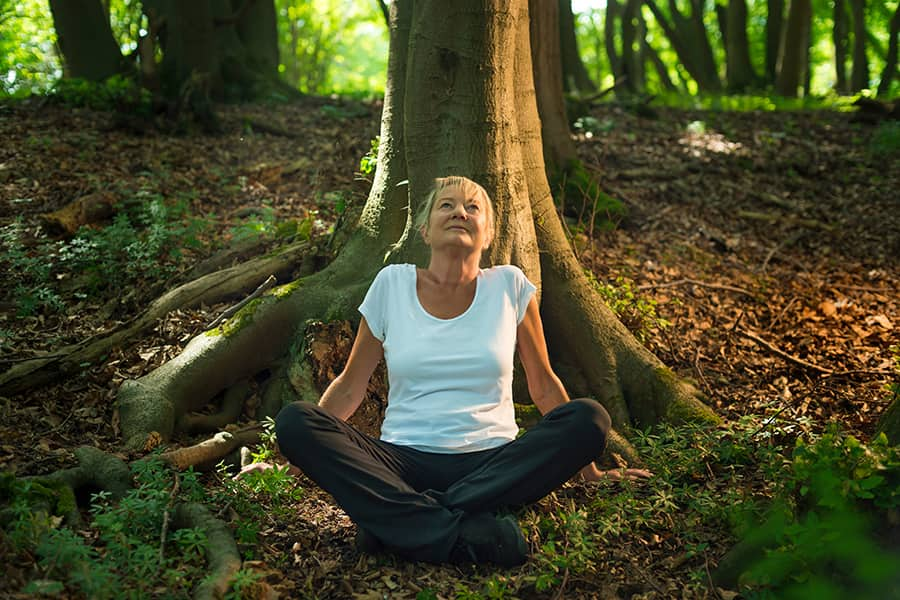

Image of a woman sitting cross-legged. She is in a forest and sitting underneath a tree. She looks calm.

We often recognise that a walk in nature can help clear the mind and lift our mood. Forest bathing takes this a little further. Rather than walking for exercise, reaching a destination or simply enjoying the outdoors, forest bathing invites you to slow down and intentionally experience nature through the senses.

Originating in Japan as Shinrin-Yoku, forest bathing may be experienced independently, or through a facilitated session where a trained guide supports you through gentle sensory invitations: noticing sounds, scents, textures, light, movement and the body’s response to the natural environment.

While a walk in nature can be restorative, a facilitated forest bathing session offers a more intentional experience. A trained certified guide gently leads you through sensory invitations, helping you notice sound, scent, texture, light, movement and the body’s response to the natural environment. Sometimes this kind of guidance can help us slow down, reconnect with ourselves and remember how to be present again.

Parks Victoria offers information on forest bathing, suggested locations and pathways for experiencing this practice with a certified forest bathing practitioner.

A vingette of a womans hands positioned to write in a notebook.

Journal with Ingrid offers a guided and supportive approach to journalling, helping individuals move past the blank page and embrace writing as a meaningful practice for wellbeing.Through guided journalling experiences, online programs, group sessions, and practical resources, Ingrid creates opportunities to pause, reflect, and build self-awareness.

For therapists who spend much of their day focused on the needs of others, journalling offers a simple yet valuable opportunity: time to turn inward, listen, and restore.

This may also serve as a valuable resource to share with clients interested in exploring gentle, self-directed methods to support their wellbeing between appointments. Instead of prescribing journalling, therapists can present it as an optional resource for clients drawn to reflective practices.